Best Emotional Support Animals for Texas Apartments — A Clinician-Vetted Lineup
Finding the right emotional support animal for an apartment in Texas is equal parts science, self-knowledge, and practical common sense. The animal that genuinely complements your therapeutic needs may look very different from the one your neighbor swears by — and the animal that thrives in a 650-square-foot unit in Austin may struggle in a third-floor walk-up in Dallas. This clinician-vetted guide walks you through the most apartment-compatible ESA options available to Texas residents, the federal housing protections that safeguard your right to keep them, and the one document that makes all of it legally actionable: a valid ESA letter issued by a licensed mental health professional (LMHP) licensed in the state of Texas.
Before we dive in, a word on the legal architecture. Under the Fair Housing Act (FHA) and HUD's authoritative guidance document FHEO-2020-01 — Assessing a Person's Request to Have an Animal as a Reasonable Accommodation Under the Fair Housing Act — housing providers in Texas are generally required to grant reasonable accommodations for emotional support animals, even in buildings with strict no-pet policies, provided the resident has a disability-related need and a properly documented ESA letter from a qualified clinician. That letter is not a registration, a certificate, or an ID card; no national ESA database exists, and HUD has explicitly warned consumers that online registries offering such documents are not legitimate. The only document that carries legal weight is one signed by an LMHP who has conducted a genuine clinical evaluation of your mental health needs.
With that foundation in place, let's explore the animals most likely to serve you well — therapeutically, practically, and legally — in a Texas apartment setting.
Disclaimer: This article is provided for informational purposes only and does not constitute medical, mental-health, or legal advice. Only a licensed mental health professional can determine whether an emotional support animal is therapeutically appropriate for your individual circumstances. For housing disputes involving your ESA rights, consult a Texas-licensed attorney or contact your local legal aid office for FHA enforcement guidance.
1. Dogs — The Gold Standard of Emotional Support
It is hardly surprising that dogs top nearly every clinician's list when the conversation turns to emotional support animals. The human-canine bond is among the most thoroughly studied therapeutic relationships in behavioral medicine, with a substantial body of peer-reviewed literature linking regular dog interaction to measurable reductions in cortisol levels, improved mood regulation, and decreased subjective feelings of loneliness. For Texas apartment dwellers managing conditions such as anxiety, depression, PTSD, or panic disorder, many licensed clinicians find that a calm, well-tempered dog can provide a grounding presence that no app or wellness routine fully replicates.
In the apartment context, breed temperament and adult size matter enormously — for your neighbor's peace of mind as much as your landlord's. Smaller and medium-sized breeds with lower prey drives and moderate exercise requirements tend to adapt well to Texas apartment living. Think Cavalier King Charles Spaniels, French Bulldogs, Shih Tzus, Pugs, and — for those with slightly more square footage — well-exercised Labrador Retrievers or Golden Retrievers, both of which consistently rank among the most emotionally intuitive breeds. Note that breed-specific legislation (BSL) still exists in some Texas municipalities, so verify local ordinances before selecting a breed. It is also worth remembering that an ESA dog is not a service dog; it has no public-access rights under the Americans with Disabilities Act, and FHA protections apply specifically to housing.
A brief word on behavior: HUD's FHEO-2020-01 guidance is clear that a housing provider may deny an accommodation if the specific animal poses a direct threat to health and safety or causes substantial physical damage to property. Basic ESA training fundamentals — reliable recall, leash manners, appropriate crating — protect both your animal and your housing rights. For a deep dive into the breeds best suited to Texas apartment life, our companion guide on ESA dogs and top apartment-friendly breeds in Texas covers size, temperament, and energy profiles in clinical detail.
Practical Takeaway: A calm, well-socialized dog with basic manners is the most recognized and therapeutically validated ESA option for apartment living. Choose a breed whose adult size and energy level match your actual living space, confirm local breed restrictions, and ensure your Texas ESA letter specifically references your disability-related need for the animal.
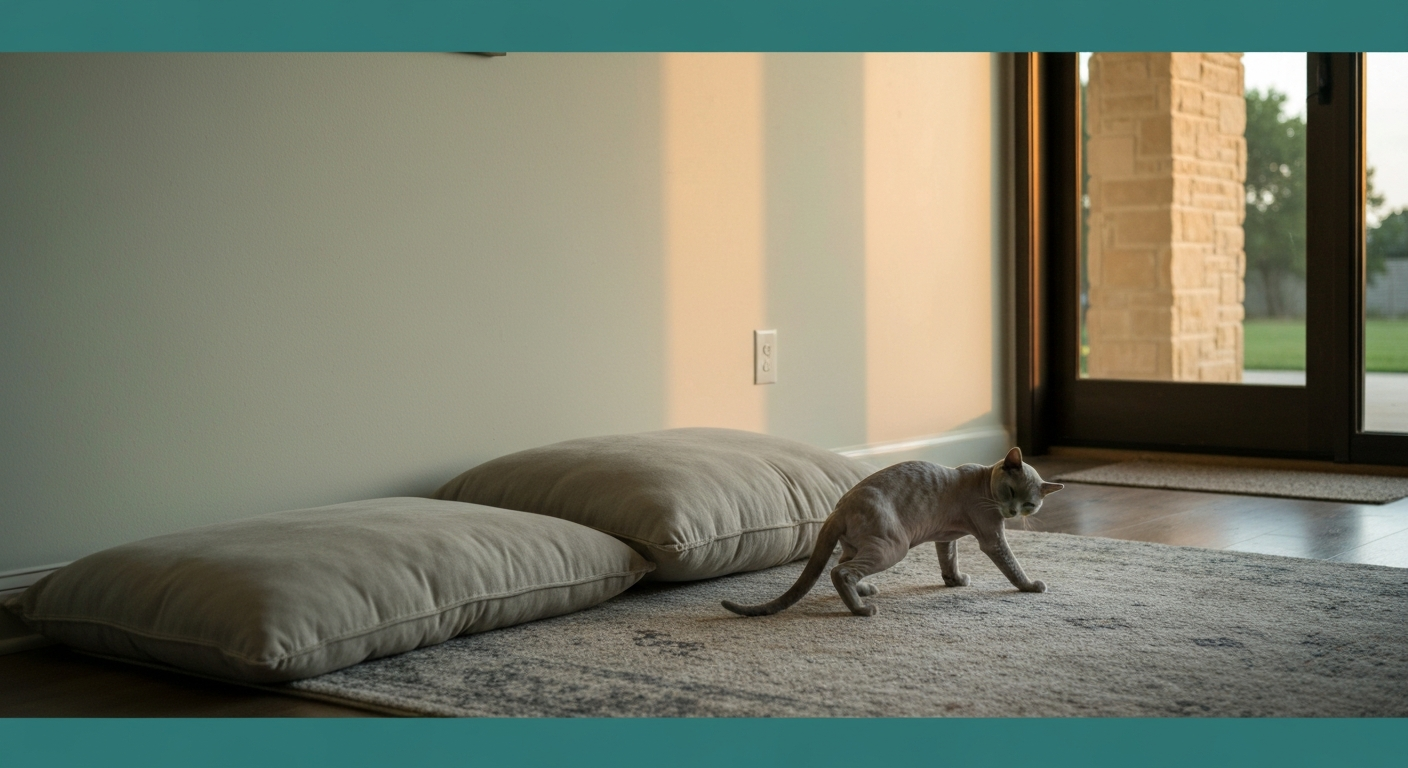
2. Cats — Quiet Comfort for High-Density Living
For Texas apartment residents who prefer lower-maintenance companionship or who live in particularly noise-sensitive buildings, cats offer a compelling therapeutic profile. Research published in peer-reviewed journals has associated cat ownership with lower rates of cardiovascular disease and reduced anxiety responses, and many licensed clinicians note that the rhythmic sensation of a cat's purr — occurring at frequencies between 25 and 150 Hz — has a measurable calming effect on the nervous system. For individuals managing social anxiety, depression, or insomnia, the predictable, soothing presence of a cat may align exceptionally well with clinical recommendations.
Cats are intrinsically well-suited to apartment environments. They are self-cleaning, require no daily outdoor walks, and generate minimal noise — a significant practical advantage in buildings with thin walls and attentive neighbors. From a landlord relations standpoint, a well-litter-trained cat with claws appropriately managed (through scratching posts, not declawing, which carries its own welfare concerns) is among the least disruptive ESA options available. Breeds such as the Ragdoll, British Shorthair, Russian Blue, and Scottish Fold are frequently cited for their docile temperaments and low vocalization, making them particularly compatible with close-quarter apartment living across Texas cities.
As with all ESA animals, the FHA's reasonable accommodation framework applies here: your housing provider cannot charge a pet deposit for an ESA cat (though they may seek compensation for actual damage caused), and a no-pet lease clause does not override your federally protected accommodation rights when supported by a valid LMHP-issued letter. For a clinician-informed overview of cat breeds and behavioral considerations specific to Texas renters, visit our guide on ESA cats as quiet companions in Texas.
Practical Takeaway: Cats are among the most apartment-compatible ESA options in Texas — low noise, low space requirements, and high therapeutic value. A legitimate ESA letter from a Texas-licensed clinician is still required to invoke FHA housing protections regardless of the animal's size or species.
3. Rabbits — Gentle, Hypoallergenic-Friendly, and Underestimated
Rabbits occupy an underappreciated but genuinely strong position in the ESA landscape for Texas apartment residents, particularly for those who share living spaces with individuals who have pet-dander allergies, or for renters in buildings where the presence of a dog or cat might generate pushback from neighbors. Rabbits are largely odorless when their habitat is maintained properly, they are quiet by nature (though they do communicate through body language and occasional thumping), and their soft fur and calm demeanor make them excellent candidates for the kind of tactile, grounding interaction that many mental health professionals associate with anxiety relief and emotional regulation.
From a therapeutic standpoint, the routine of caring for a rabbit — structured feeding times, gentle handling, habitat cleaning — can be particularly beneficial for individuals whose clinicians have identified a need for increased daily structure and purpose, common therapeutic goals for those managing depression or ADHD-related executive dysfunction. Many Texas apartment buildings that might resist a dog are far more receptive to a well-housed rabbit, and while that landlord receptiveness has no bearing on your legal FHA rights, harmonious relationships with property managers make daily life considerably more comfortable. Litter training is highly achievable with rabbits, which further reduces housing-related friction.
It is worth noting that rabbits require species-appropriate care including sufficient space to move, social interaction, and a veterinarian familiar with exotic small mammals — all of which are readily available in Texas metropolitan areas. Lifespan runs 8 to 12 years for well-cared-for domestic rabbits, so this is a meaningful long-term commitment. For a thorough look at rabbit care in the Texas ESA context, our detailed guide on rabbits as emotional support animals in Texas covers housing logistics, veterinary considerations, and how to document your need appropriately.
Practical Takeaway: Rabbits are a genuinely therapeutic, apartment-compatible ESA option that many Texas renters overlook. They are quiet, relatively hypoallergenic in practice, and highly responsive to gentle handling — but they require committed, knowledgeable care and a valid ESA letter to activate FHA housing protections.
4. Guinea Pigs — Small Footprint, Surprisingly Rich Bonds
Guinea pigs have earned genuine clinical attention as ESA candidates in recent years, particularly for apartment residents who benefit therapeutically from tactile engagement but whose living situations make larger animals impractical. These small, social rodents are vocal in endearing rather than disruptive ways — their signature "wheeks" and purring sounds are generally quiet enough to be inaudible outside a single room — and their responsiveness to gentle handling and voice recognition makes them surprisingly interactive companions for a pocket-sized pet. Mental health professionals working with clients who experience social isolation, grief, or chronic anxiety frequently note that the simple act of holding and hand-feeding a guinea pig can serve as an effective mindfulness anchor.
From a purely practical standpoint, guinea pigs are among the most apartment-friendly ESA animals available in Texas. Their habitat — a spacious cage or C&C enclosure — fits comfortably in even a studio apartment, they produce minimal odor when bedding is changed regularly, and they have no capacity to disturb neighbors through barking or scratching. They are also highly social animals and generally do best in bonded pairs, which is worth discussing with a licensed clinician when considering whether the specific setup aligns with your therapeutic goals. Lifespan is approximately four to seven years, making this a meaningful but manageable long-term commitment relative to dogs or cats.
As a "common household animal," guinea pigs typically fall well within the range of animals a housing provider is expected to accommodate under FHA guidelines, provided your ESA letter documents the therapeutic relationship clearly. HUD's FHEO-2020-01 guidance specifies that for animals that are not common household pets, the analysis becomes more complex — but guinea pigs rarely trigger that heightened scrutiny. Confirm the specifics with a Texas-licensed attorney if your housing provider resists, and ensure your documentation is issued by a qualified LMHP licensed in Texas.
Practical Takeaway: Guinea pigs offer real therapeutic value in an exceptionally compact, quiet package — an excellent choice for Texas apartment residents with limited space or noise-sensitive buildings. House them in bonded pairs for their welfare, maintain clean bedding diligently, and secure a clinician-issued ESA letter before approaching your housing provider.
5. Birds — Cognitive Stimulation and Structured Routine
Birds represent a more specialized but clinically meaningful ESA option for a particular subset of Texas apartment residents: those for whom cognitive engagement, conversational interaction, and highly structured daily routines carry the most therapeutic weight. Species such as cockatiels, budgerigars (parakeets), lovebirds, and small conures are frequently cited by mental health professionals as appropriate for apartment environments — they are compact, highly interactive, and capable of forming genuine bonds with their owners that many bird keepers describe as among the most rewarding relationships of their lives. For individuals managing depression, social isolation following major life transitions, or conditions that benefit from increased mental stimulation, a well-socialized parrot-family bird can provide a uniquely engaging therapeutic presence.
The practical calculus for birds in Texas apartments requires honest self-assessment. Even smaller species such as cockatiels can produce meaningful noise — morning contact calls, singing, and alarm calls — that may create tension in apartment buildings with shared walls. Larger parrots (African Greys, Amazon parrots, macaws) are generally not recommended for apartment ESA purposes due to volume and the significant expertise required for their care. Ventilation and air quality are also relevant considerations, as birds have highly sensitive respiratory systems; Texas apartments with gas stoves and non-stick cookware can pose serious risks, requiring thoughtful kitchen management. These are factors worth discussing openly with both a veterinarian experienced in avian medicine and the licensed clinician evaluating your ESA needs.
HUD's FHEO-2020-01 framework treats birds — particularly common species such as parakeets and cockatiels — as within the household-pet category for ESA accommodation purposes. As with all ESA situations, a valid Texas-issued LMHP letter is the foundational document, and a housing provider's ability to deny accommodation remains limited to situations involving direct threat or substantial property damage. If a landlord challenges your ESA bird, consult a Texas-licensed attorney rather than attempting to negotiate the legal framework independently.
Practical Takeaway: Birds can be richly therapeutic ESA companions for Texas apartment residents who thrive on daily structure, cognitive engagement, and responsive social bonding — but choose a quieter, smaller species, assess your building's acoustics honestly, and confirm your living environment is safe for avian respiratory health before committing.
6. Fish — Underrated Calm in Every Cubic Inch
Fish may seem like a counterintuitive ESA recommendation until you consider the clinical evidence: a growing body of research, including studies conducted in collaboration with the National Marine Aquarium, has documented measurable reductions in heart rate, blood pressure, and self-reported anxiety in individuals who spend time observing fish in aquariums. For Texas apartment residents managing chronic stress, generalized anxiety disorder, or conditions exacerbated by overstimulation, a well-maintained aquarium may provide a uniquely soothing environmental intervention — one that requires no walks, produces no allergens, and generates no sound that could disturb neighbors beyond a gentle filter hum.
The therapeutic mechanism appears to involve both the visual engagement of watching fluid, unpredictable movement and the meditative discipline of maintaining the aquarium itself — regular water testing, careful feeding, habitat maintenance — which provides structure and a sense of competency and care. This combination of passive sensory benefit and active nurturing responsibility can be therapeutically meaningful for individuals whose clinicians have identified low self-efficacy or anhedonia as clinical targets. Fish are also among the most accessible ESA animals from a financial standpoint, with a basic freshwater setup achievable at relatively modest cost.
One important clarification: not all housing providers will intuitively recognize fish as ESA animals, and some lease agreements contain clauses restricting aquarium size due to water-damage risk — a concern that is not entirely unreasonable in upper-floor Texas apartments. As with all ESA animals, a valid clinician-issued letter documenting the disability-related need remains the cornerstone of any accommodation request, and the FHA's reasonable accommodation framework applies regardless of how unusual the housing provider finds the request. For questions about specific lease language, consult a Texas-licensed attorney.
Practical Takeaway: A well-maintained aquarium can deliver genuine, research-supported therapeutic benefits in virtually any Texas apartment — zero noise, zero allergens, and a meditative daily care routine. Confirm aquarium size restrictions in your lease and document your therapeutic need through a licensed Texas clinician before submitting an accommodation request.
7. Miniature Horses — Rarely Appropriate for Apartments, but Worth Addressing
Miniature horses occupy a unique position in federal accommodation law: they are recognized as potential service animals under the Americans with Disabilities Act (ADA) — specifically, the ADA's 2011 revised regulations acknowledge miniature horses trained to perform specific disability-related tasks. In the ESA context, however, HUD's FHEO-2020-01 guidance places miniature horses in the category of animals that are not common household pets, which means housing providers may apply a more rigorous individualized analysis before granting an accommodation, including assessment of whether the specific building can reasonably accommodate the animal's size and sanitation needs.
For the vast majority of Texas apartment residents, a miniature horse is simply not a practical ESA option — not because the law categorically prohibits it, but because most apartment structures cannot reasonably accommodate the animal's size, waste management needs, and outdoor-access requirements without imposing an undue burden on the housing provider. HUD's guidance explicitly permits housing providers to consider factors such as the size of the dwelling, the presence of outdoor space, and the physical constraints of the building when evaluating non-traditional ESA requests. A third-floor unit in a Houston high-rise does not provide a reasonable housing environment for a miniature horse regardless of the strength of the clinical documentation.
We include this entry not to dismiss the genuine therapeutic relationships some individuals form with equines — equine-assisted therapy is a recognized clinical modality with meaningful evidence — but to set accurate expectations and prevent Texas residents from pursuing accommodation requests that are unlikely to succeed and may damage their relationship with their housing provider. If equine interaction is a meaningful part of your therapeutic plan, discuss with your Texas-licensed clinician whether off-site equine therapy programs might serve your needs without the housing friction.
Practical Takeaway: Miniature horses are legally recognized in specific federal frameworks but are rarely appropriate ESA animals for Texas apartment living due to insurmountable practical constraints. Direct your energy toward one of the other animals on this list and discuss equine therapy program alternatives with your licensed clinician.
Your Texas ESA Letter: The Document That Makes It All Legal
Every animal on this list, regardless of how naturally apartment-compatible it may be, requires the same foundational document to activate FHA housing protections: a valid ESA letter issued by a licensed mental health professional who holds an active license in the state of Texas. That means an LCSW, LMFT, LPC, psychologist, psychiatrist, or other qualifying LMHP who has conducted a genuine clinical evaluation of your mental health history and determined — based on professional clinical judgment — that an emotional support animal is therapeutically appropriate for your individual needs.
This is not a formality. HUD's FHEO-2020-01 guidance gives housing providers the right to request reliable documentation when the disability and/or disability-related need for an ESA is not obvious. A letter that appears to have been generated by a website algorithm, issued by a clinician not licensed in Texas, or purchased through an "ESA registry" without a genuine clinical evaluation is not reliable documentation — and a savvy housing provider or their legal counsel will recognize it as such. Worse, presenting fraudulent documentation may undermine your credibility if you later need to pursue a legitimate FHA complaint. For a comprehensive overview of what a valid Texas ESA letter must contain and how the FHA accommodation request process works, our guide on Texas ESA housing letters and FHA protections walks through every element in clinical and legal detail.
The evaluation process at ESA Letter Texas is conducted entirely by licensed mental health professionals licensed in Texas. Each clinician reviews your individual mental health history, asks clinically relevant questions, and makes an independent professional determination about whether an ESA letter is appropriate for your circumstances. There is no guaranteed approval — because a legitimate clinician evaluates each person individually, and ethical practice does not permit predetermined outcomes. What we do offer is a thorough, compliant, clinician-led process that produces documentation Texas housing providers can recognize and respect.
Frequently Asked Questions
Can my Texas landlord charge a pet deposit for my ESA?
Under the Fair Housing Act, a housing provider generally cannot charge a pet deposit or pet fee for an emotional support animal, as ESAs are accommodation animals, not pets under the FHA framework. However, the housing provider may seek compensation for actual damage the animal causes to the property. Consult a Texas-licensed attorney if your landlord is insisting on a deposit despite your valid ESA documentation.
Does my ESA need any special training to qualify?
Unlike ADA service animals, emotional support animals are not required to have formal task training. However, basic behavioral reliability — housebreaking, not posing a threat to others — is practically important, as HUD's FHEO-2020-01 guidance allows housing providers to deny accommodation if a specific animal poses a direct threat or causes substantial damage. Our guide on ESA training basics in Texas provides a practical framework for building a well-mannered ESA regardless of species.
Does an ESA letter give my animal access to restaurants, stores, or airlines?
No. An ESA letter provides housing-related protections under the FHA only. ESAs do not have public-access rights under the ADA (that right belongs exclusively to trained service animals), and as of January 2021, the Department of Transportation's revised regulations removed ESAs from Air Carrier Access Act protections — meaning airlines now treat ESAs as regular pets. If air-travel accommodation is a priority, speak with a qualified clinician about whether a Psychiatric Service Dog (PSD) might be appropriate for your situation.
How do I know if I may qualify for an ESA letter in Texas?
Many people living with anxiety, depression, PTSD, OCD, phobias, bipolar disorder, and other mental health conditions may qualify — but only a licensed Texas mental health professional can make that determination based on a genuine clinical evaluation of your individual circumstances. The right starting point is an honest conversation with a qualified clinician, not a checklist on a website.
Final Thoughts
The best emotional support animal for your Texas apartment is the one that genuinely complements your therapeutic needs, fits responsibly within your living environment, and is supported by legitimate clinical documentation issued by a licensed Texas mental health professional. Dogs and cats are the most widely recognized options, but rabbits, guinea pigs, birds, and even fish can provide meaningful, evidence-informed therapeutic benefits in the right circumstances — and each carries the same FHA housing protections when documented correctly.
What no animal on this list can do on its own is replace professional mental health care. An ESA is a therapeutic adjunct — a complement to, not a substitute for, the work you do with a licensed clinician. If you believe an emotional support animal might be therapeutically appropriate for your situation, we encourage you to begin that conversation with a qualified professional today. And when you are ready to explore whether a Texas ESA letter is right for you, our team of licensed Texas clinicians is here to conduct a thorough, ethical, and compliant evaluation — no registries, no instant approvals, and no shortcuts.
This article is for informational purposes only and does not constitute medical, mental-health, or legal advice. Individual outcomes vary, and only a licensed mental health professional can determine whether an emotional support animal is therapeutically appropriate for your specific circumstances. For housing disputes or landlord conflicts involving your ESA rights, please consult a Texas-licensed attorney or contact your local legal aid organization for Fair Housing Act enforcement guidance.
Ready to start your Texas ESA letter?
Licensed Texas clinician review. Compliant with state law.
Get My Texas ESA Letter